

SideKick / Interactive prototype
Designing a friendship app around getting together.
We helped SideKick rethink a friendship-app concept through user research, product strategy and a high-fidelity prototype centered on shared, in-person activities.
Explore the story ↓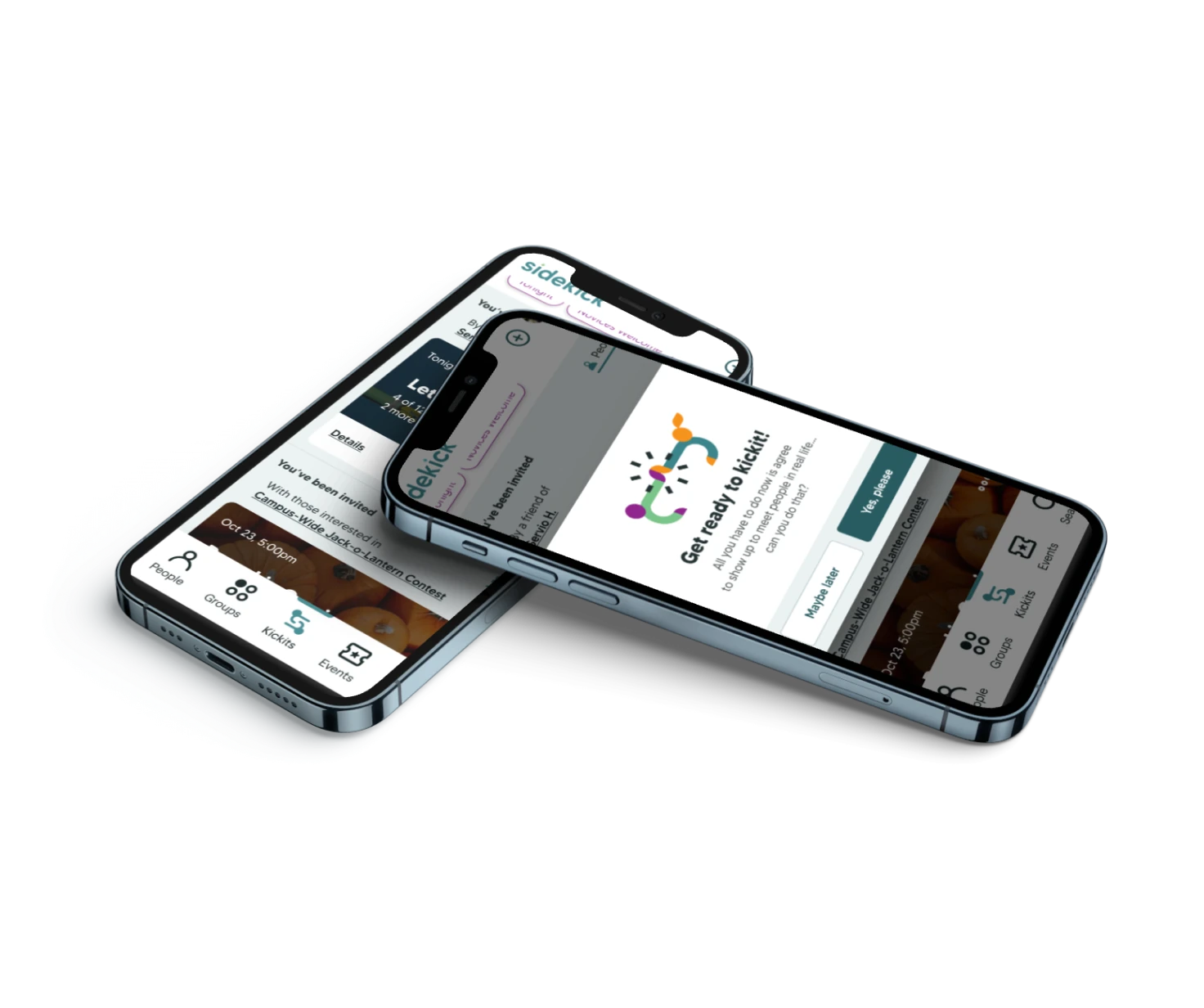
01 / The challenge
Design for friendship beyond the screen.
SideKick’s founders wanted to help people form real-world friendships. The initial concept drew on familiar matching-app patterns, but the product needed to understand why those patterns might not fit platonic connection.
More about the challenge
The challenge was to turn that goal into a specific, testable experience that considered safety, expectations and the step from an online interaction to meeting in person.
- Project
- SideKick
- Our contribution
- Research, product strategy & UX/UI
- People using it
- People seeking platonic social connection
- Engagement
- Interactive prototype
02 / A product decision
Engaging the user
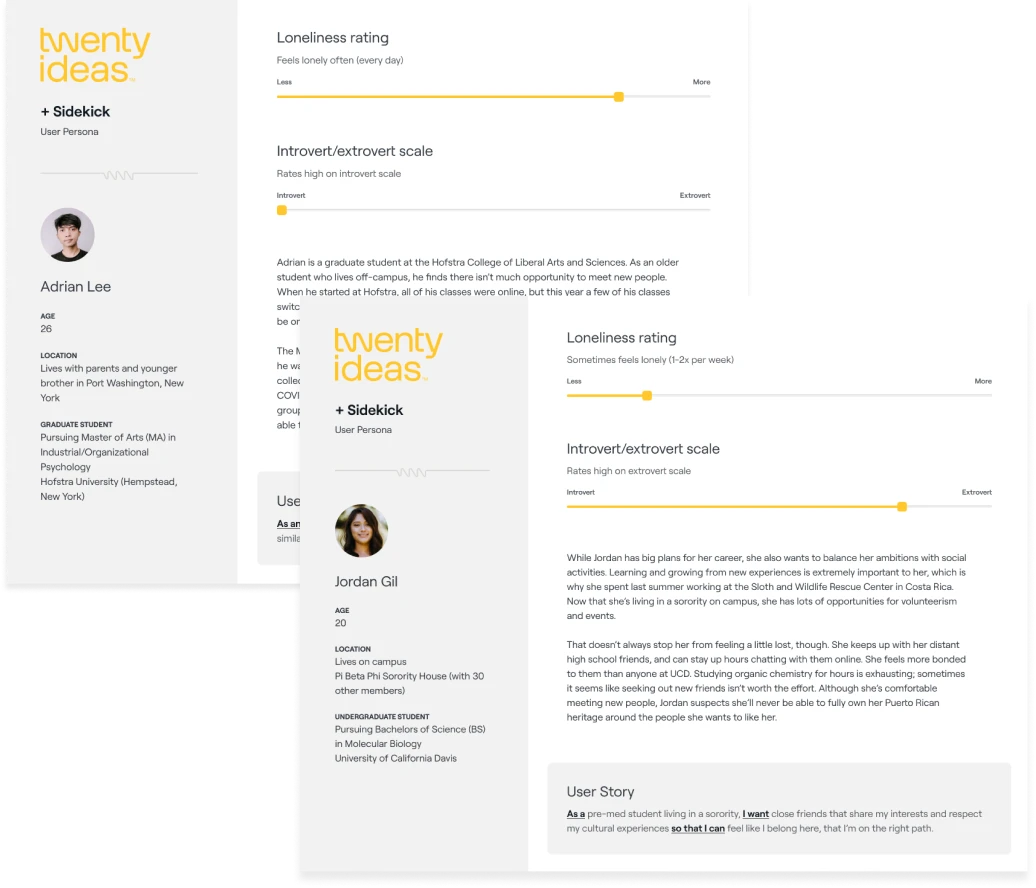
We combined a survey of university students with individual interviews. The work explored everyday social behavior, prior use of online friendship tools and concerns about taking a connection offline.
03 / Inside the work
Let research change the product direction.
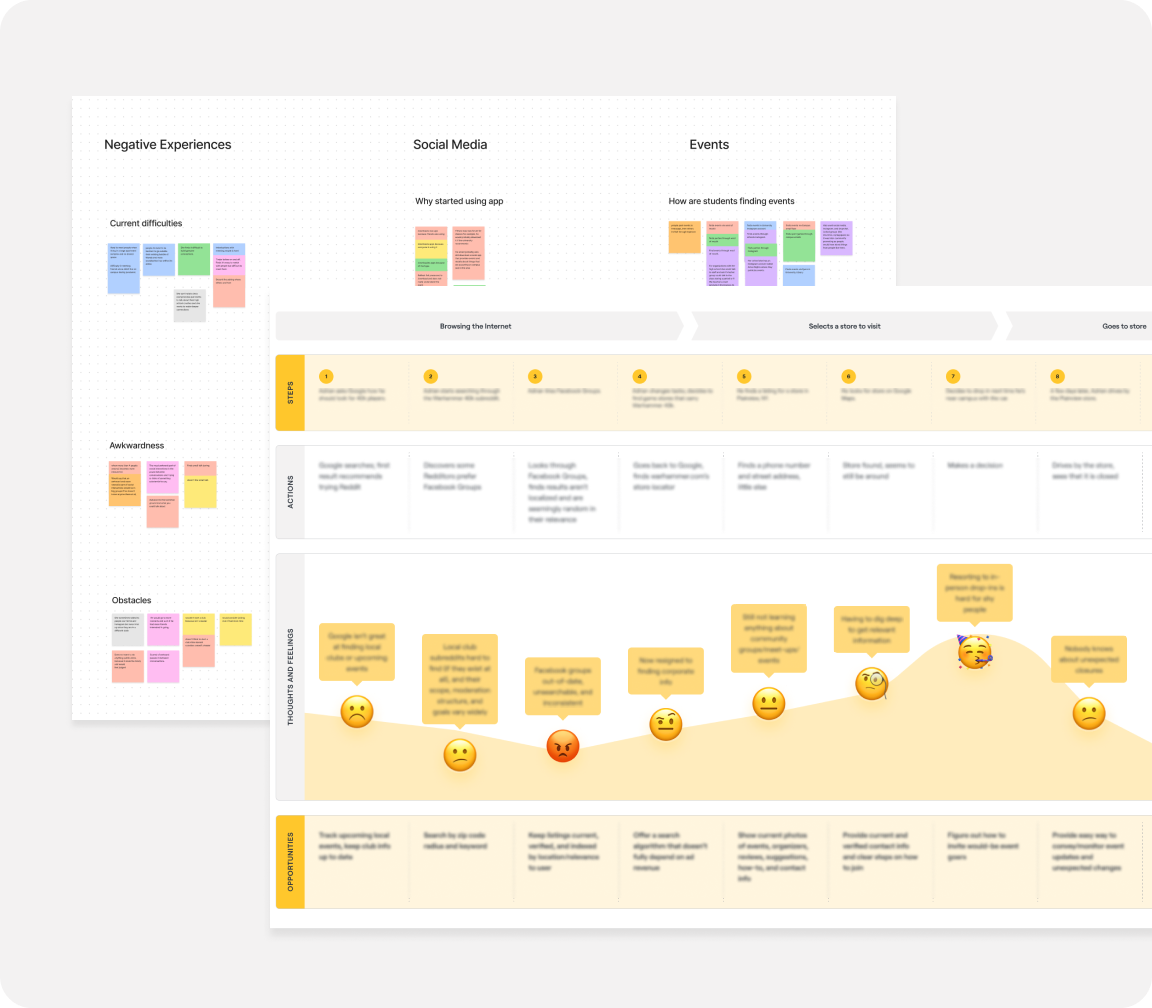
Surveys and interviews explored participants’ experiences with social apps and their concerns about meeting new people. Personas and journey maps informed the product direction.
Research shifted the concept away from personality matching and toward shared interests, proximity and a concrete plan: the “KickIt.” We prioritized a proposed MVP and expressed it in an interactive prototype.
04 / A product decision
Learning from the past
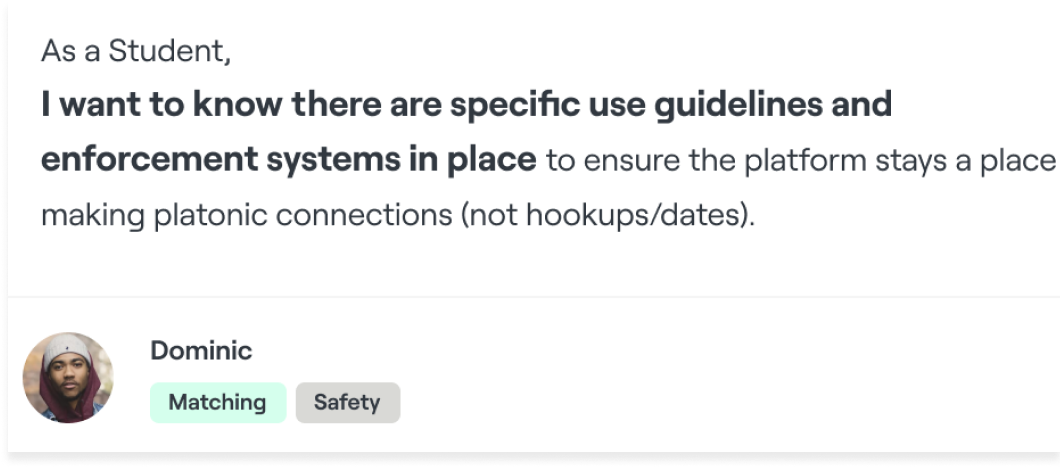
Some research participants associated matching formats with dating apps and described unwanted non-platonic interactions. Safety concerns and the tendency of social products to keep people online helped shape a different direction.
05 / A product decision
Join, plan, do
The prototype introduces interests, suggests relevant people and activities, and centers a commitment to meet: a KickIt. Proposed group chat supports planning before the activity and sharing afterward.
06 / A product decision
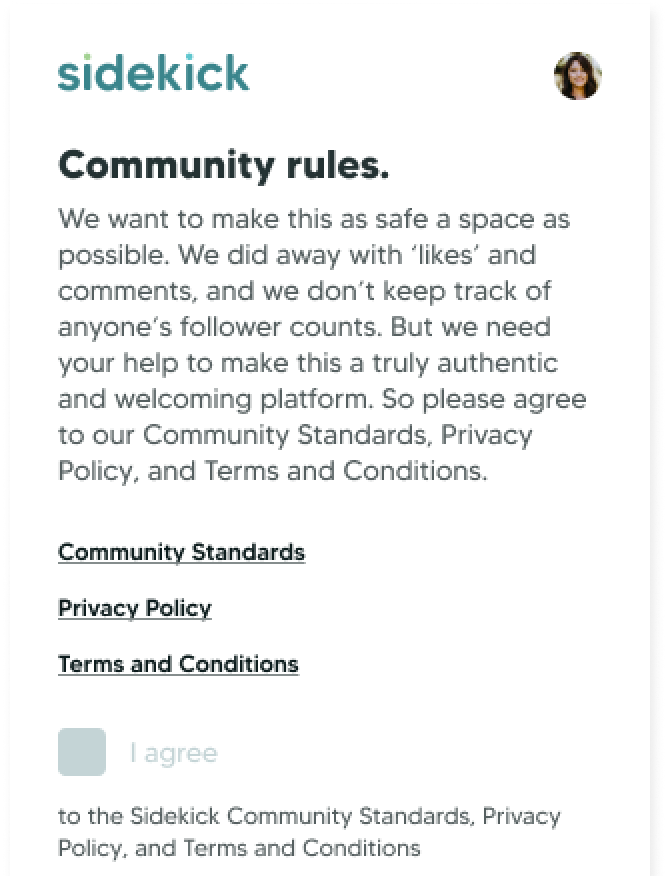
Keeping it friendly
The proposed onboarding explains platonic community standards. Reporting and post-event feedback are part of the designed concept.
07 / A product decision
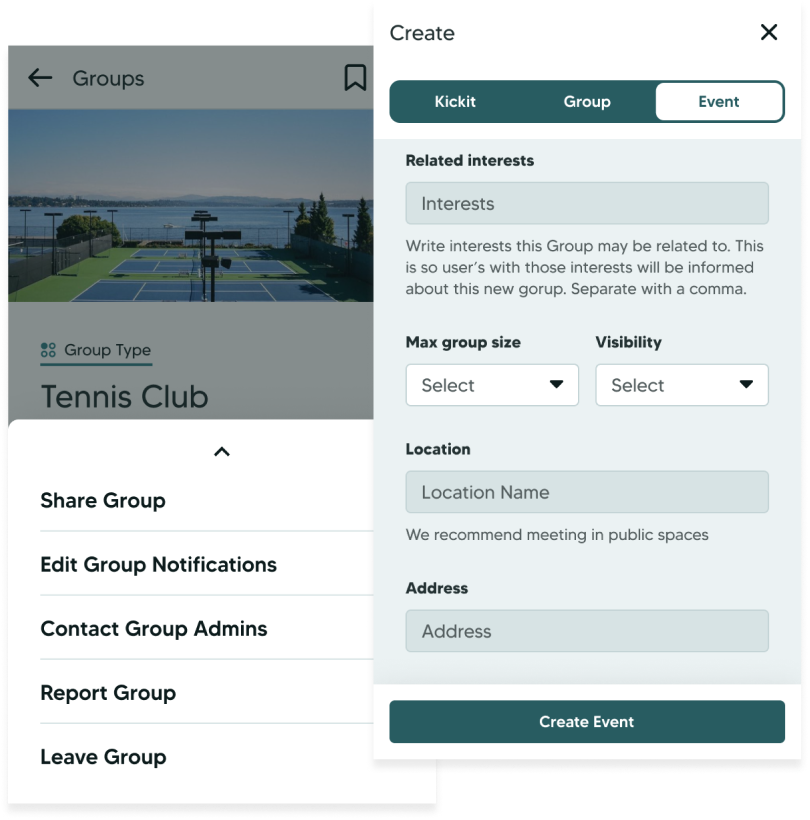
Centering Safety
Public, private and invite-only gathering settings give organizers different levels of visibility in the proposed experience. University-restricted access was one potential launch approach.
08 / A product decision
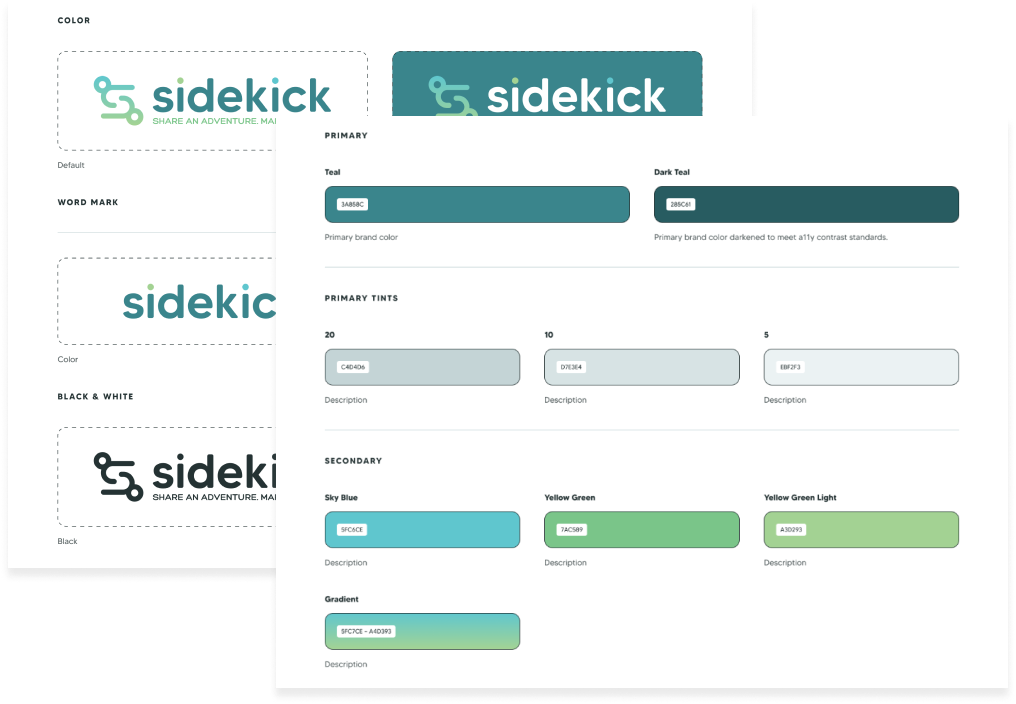
Looking the part
We built on the client’s existing logo and color palette to create a UI and design system. The same visual language supported the prototype and assets for the client’s presentations.
09 / A product decision
Putting it together
The delivery combined the proposed feature set, user flows and visual system in a high-fidelity prototype. It gave the team concrete material for user testing and planning a future implementation.
10 / Our contribution
Research changed
what we chose to design.
The founders brought the ambition to help people form friendships. Interviews and surveys helped us question matching-app conventions and shape a different proposal around shared interests and a plan to meet.
We delivered prioritized features, user flows, a visual system and a high-fidelity prototype centered on the KickIt. Community standards, reporting and gathering visibility were designed into that proposal.
11 / Prototype
A reason to get together.
The prototype puts shared activities at the center of making a new connection.
Work with Twenty Ideas
Bring us the work
you want to make possible.
Tell us who it is for, where the experience breaks down and what needs to change.
How we build and evolve products