

DevSwarm / AI development, human direction
Build with more agents.
Keep people in control.
One place to direct coding agents, follow their progress and review what they produce. We built DevSwarm and put it to work in our own development practice.
Why we built it ↓Our own client. A real product.
Put the belief into the work.
It is easy to say AI changes software development. Building DevSwarm asks us to make that statement useful: what should a developer see, what can an agent do independently, and where does a person need to make the call?
Twenty Ideas builds DevSwarm for sibling company 21st Idea, Inc. We take on the whole product problem: strategy, interaction design, engineering and continued iteration. Our team uses the product while building it, so awkward handoffs and missing context become practical design questions.
Working with AI
More parallel work. A clearer place to direct it.
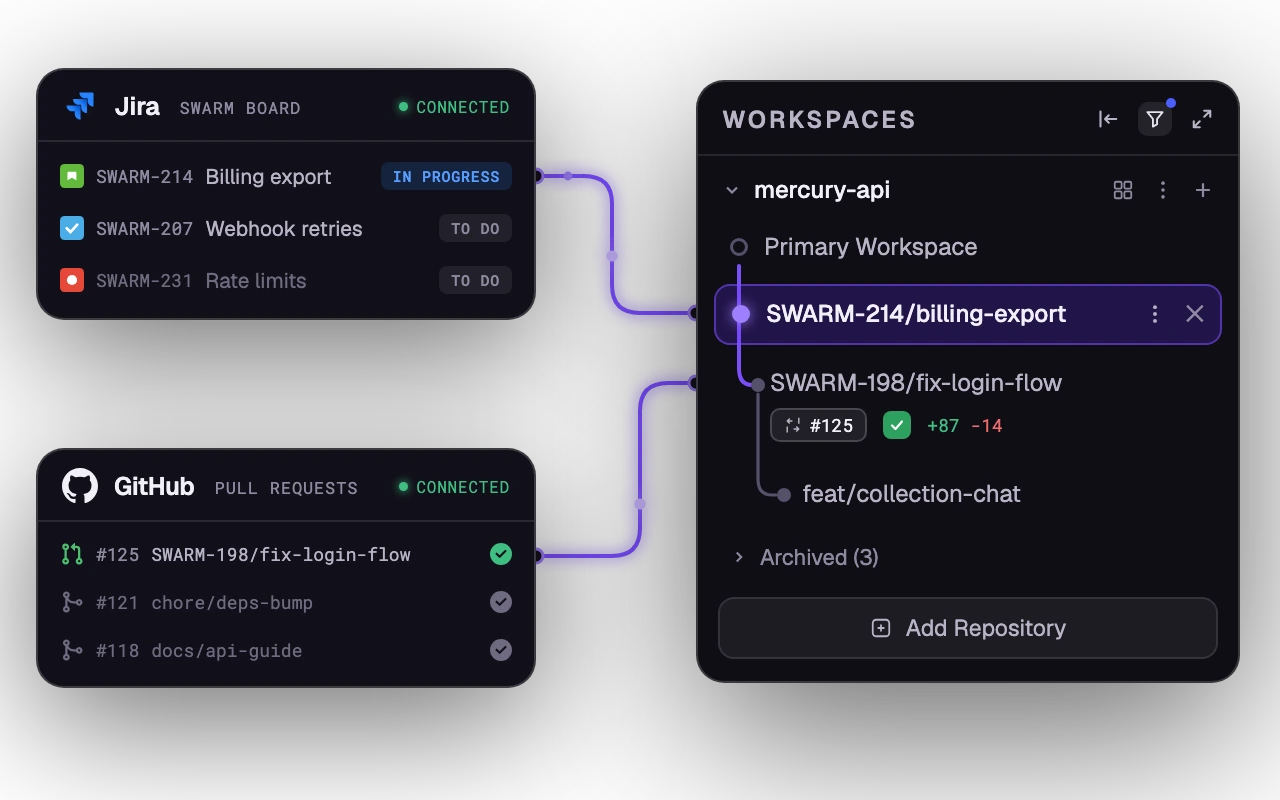
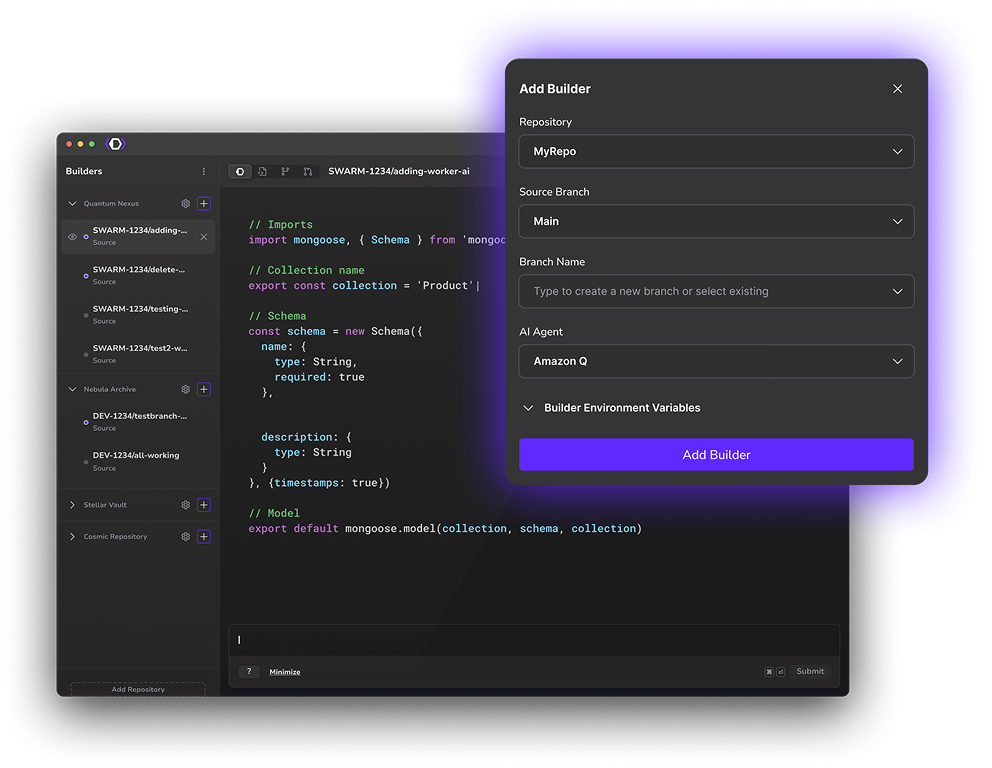
DevSwarm organizes coding agents, branches and tasks into workspaces. A developer can work across several threads while keeping each change connected to its context. Separate branches create room to explore without treating every experiment as finished work.
The product keeps the editor, terminal, files and review close. The aim is to make AI-assisted work easier to inspect and steer. People remain responsible for the decisions.
Release 2.5 / August 2026
Make the conversation part of the workspace.
The 2.5 release brings a chat interface to terminal-based coding agents. Streaming responses, tool-call cards and clickable permission prompts make the conversation easier to follow inside the editor.
This is a product-design problem as much as an integration problem. Progress, questions and failures need a visible place. People need to understand what happened before deciding what to do next.
Speed without sacrifice
More capability needs more judgment.
Our use of AI includes coding agents working on scoped development tasks. DevSwarm gives that work a visible home: a task, a branch, a conversation and changes to examine. Developers can step into the workspace and take over.
Review is part of the experience. We keep the person’s ability to inspect a change central to the product, because a generated result still needs an accountable decision about whether it belongs.
Design that belongs in the working day
Let the environment feel like yours.
Developers already have strong preferences about their tools. Version 2.5 carries the VS Code theme through DevSwarm, responds to theme changes and supports different themes for different projects.
The same release refines first-run setup, creating a workspace and finding existing work by name, branch or issue. These everyday interactions make a powerful system approachable enough to use repeatedly.
Product strategy + design + engineering
The feedback loop is part of the story.
Being our own client brings the tradeoffs close. We experience the friction, choose which problems matter next, design a response and put it back into use. The 2.5 release is one chapter in that continuing process.
That experience informs our client work and HiVE Shift: practical knowledge of adopting AI in a team, designing around its limitations and keeping the people doing the work involved in the decisions.
Earlier chapters
The product keeps moving.
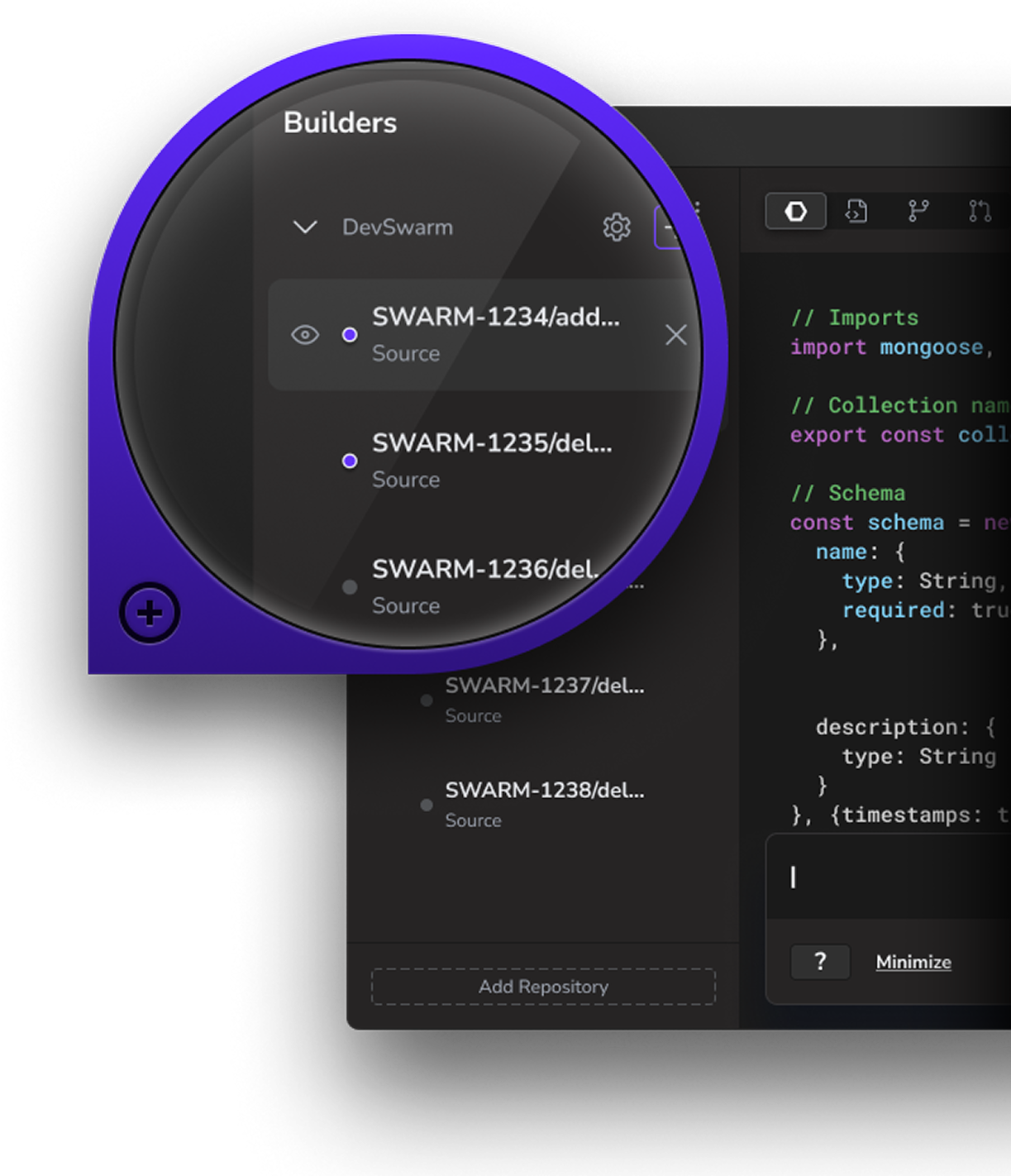
These earlier screens show where the product started: workspaces, parallel agents and a shared place to follow their activity. The current 2.5 experience above develops that foundation.
The people behind the product
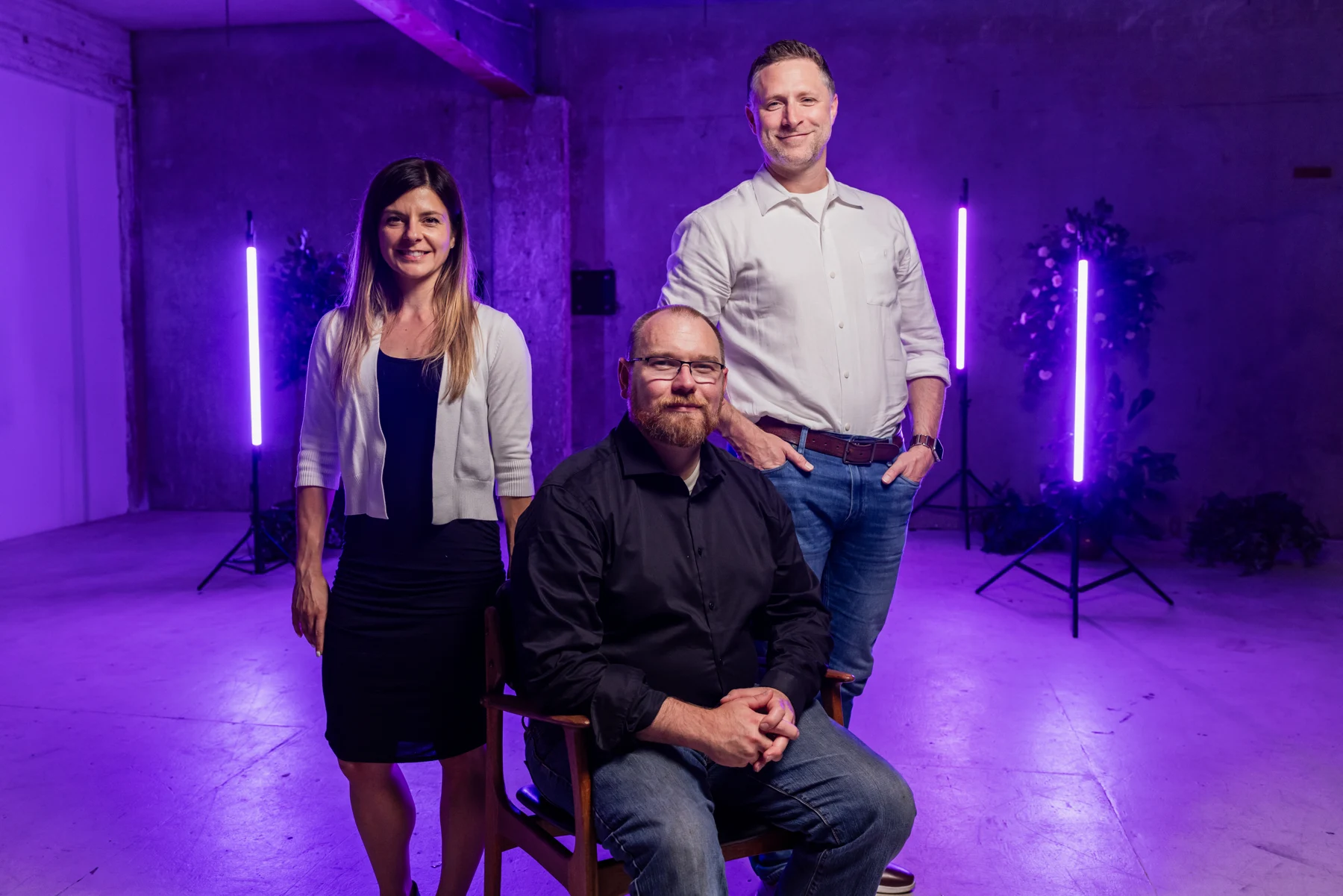
A product built by people who use it.
We used an internal version to explore parallel workflows and branch isolation, then continued developing the product through use by our own team. Product decisions could be examined in the work they were meant to support.
Building DevSwarm makes these questions practical for our team: how to organize parallel work, inspect changes and keep a developer accountable for the result.
Explore the product.
For current DevSwarm capabilities, documentation and downloads, visit its product site.
Visit DevSwarmWork with our team.
Discuss your product or how your team puts AI to work. A services engagement should fit your goals, tools and people.
Explore HiVE ShiftWork with Twenty Ideas
Bring us the work
you want to make possible.
Tell us who it is for, where the experience breaks down and what needs to change.
How we build and evolve products