The understanding that matters.
Your users, business priorities, existing work and constraints. The things a brief alone cannot tell us.


How we work
When a first version can take minutes, the next question matters more: is it useful? We help your team use AI to explore quickly, learn from real work and turn promising ideas into products people can depend on.
Let’s talk about your teamFast learning. Shared decisions. Useful progress.

Fast learning. Thoughtful decisions.
AI helps us explore and build quickly. Your team’s knowledge, real-world evidence and human judgment determine what deserves to move forward.
Possibilities take shape.
People give them direction.
Bring an idea, a prototype or a live product. We start with the question that needs attention now.
These questions repeat as the work develops. Engineering informs the early choices; learning continues after release.
Thinking and delivery, together
“Mike and his team do as much ideation as possible, but then they also execute quickly”
A shared working relationship
Quick experiments give us something to react to together. Your knowledge of the people and the problem helps us decide what to try, what to change and what is worth building further.
Your users, business priorities, existing work and constraints. The things a brief alone cannot tell us.
Product questions, designs and working software that give us something concrete to consider together.
Inside a product decision · PRVNT
For Nsight Health, patient information, monitoring and calling needed to work together around the care team.
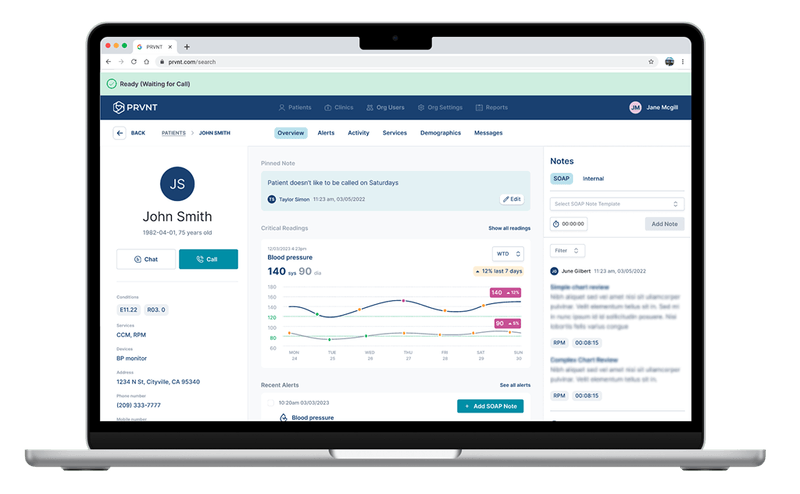
PRVNT brings the patient overview, calling controls, clinical notes and monitoring trends into a connected workflow.
The lesson: consider the work someone is doing before treating each feature as a separate task.
Read the full caseSpeed without sacrifice
An experiment and a live product carry different consequences. Match the depth of review to what people will rely on, then keep learning as the product grows.
Test the useful task. Make assumptions visible. Keep experiments contained and easy to change.
DirectionCheck the actual workflow, important errors, access and usability with the people involved.
Working evidenceAgree the testing, privacy, reliability and operating responsibilities the product needs.
Confidence to operateThese are levels of responsibility, not three mandatory phases. A change to a live product may need all three questions from the start.
AI in the work
AI can help explore alternatives, build and test. People define what matters and decide whether the result is good enough.
Agree the tools, data boundaries and review responsibilities before the work starts. Keep room to question, redirect or stop.
Define the problem and the boundaries.
Use tools to help move the work forward.
Test it, question it and understand it.
Keep responsibility with people.
This frames the work; individual tasks do not always follow a fixed sequence. Review can send us back to the question.
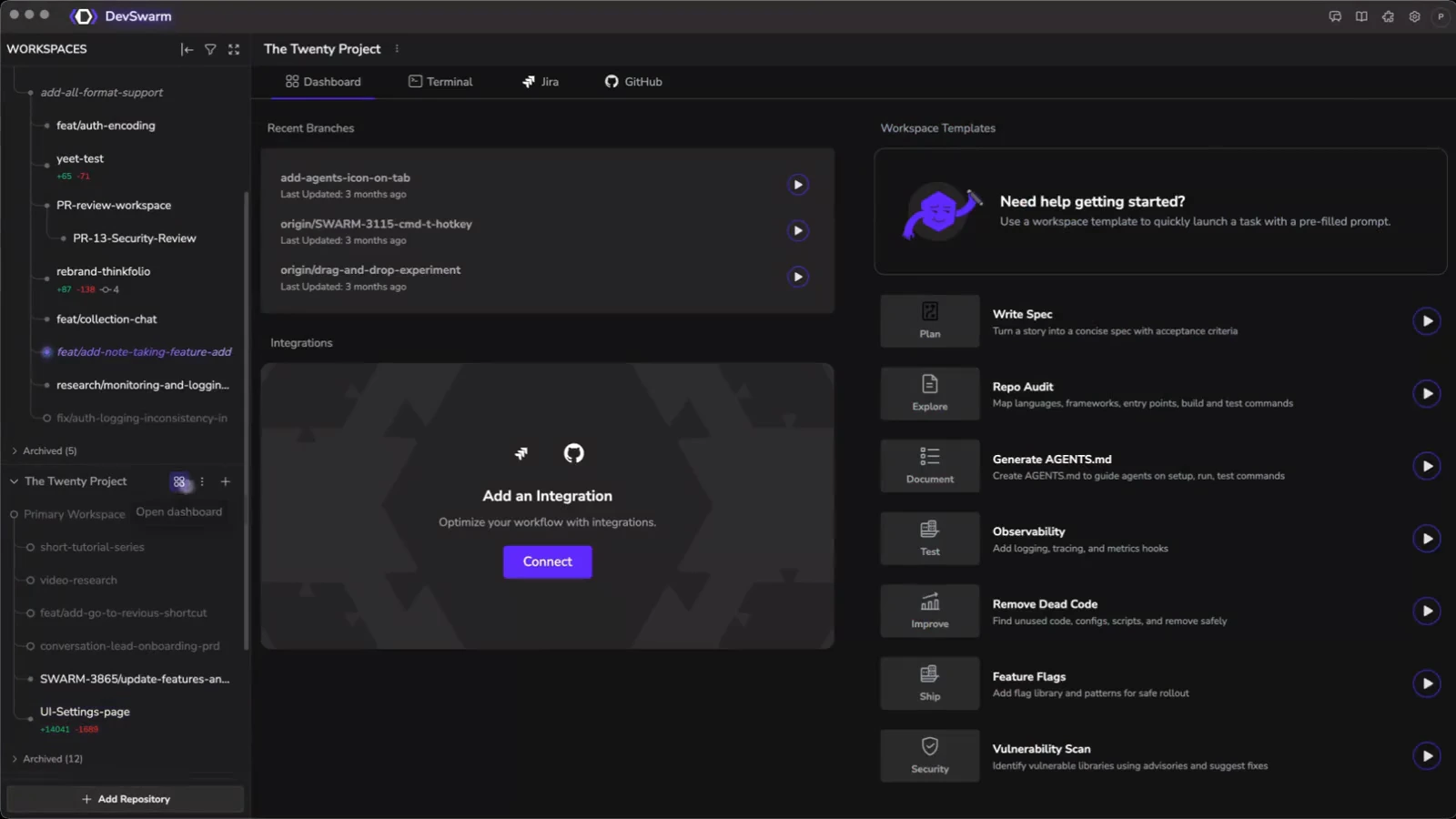
DevSwarm brings agent work and human review into the same environment. It is one concrete example of the practice we’re developing in our own work.
See DevSwarm in practiceAgree the responsibilities
Security, privacy and accessibility requirements belong in the product decisions, alongside the people responsible for them. Make the boundaries explicit before work begins.
Agree who is involved, who makes which calls, and when a tradeoff needs the sponsor. Use working software and tangible designs to review progress and decide when to change course.
Identify the systems and data the work needs, who can approve access, which tools may use it, and how access ends. AI and third-party services belong in that same agreement.
Agree what needs checking, what evidence supports acceptance, and who approves a release. Supporting a client’s compliance requirements is a scoped responsibility, not a certification.
Discuss repositories, documentation and ownership early. Agree who handles monitoring, incidents, maintenance and support after handover, and put those responsibilities in the engagement scope.
A useful first conversation
Bring an idea, a difficult question or a product that needs to evolve. We can start there.
Tell us where you’re starting